Tuesday, June 11, 2013

Series Review: Lovely*Complex by Aya Nakahara

Love*Com (Lovely*Complex), Volume 1 Description: Risa Koizumi is the tallest girl in class, and the last thing she wants is the humiliation of standing next to Atsushi Otani, the shortest guy. Fate and the whole school have other ideas, and the two find themselves cast as the unwilling stars of a bizarre romantic comedy duo. Rather than bow to the inevitable, Risa and Atsushi join forces to pursue their true objects of affection. But in the quest for love, will their budding friendship become something more complex?

Stats: Young Adult Romance Manga, 17 Volumes, English Editions Published by Viz Media LLC, from 2007 to 2010.

My Overall Rating: 4 Stars 

 Although Lovely*Complex (also known as Love*Com) was only first published in the 2000's it is by far a classic of the shojo genre. For anyone who is interested in romance manga this a must read. I would even venture to say to those who are just beginning to read manga this would be a great series to start with. For me, before I had even began reading Love*Com I had already watched the anime and the live-action Japanese movie adaptation. As I have said before, it was only a matter of time before I finally got around to reading the manga, which I did ... eventually.
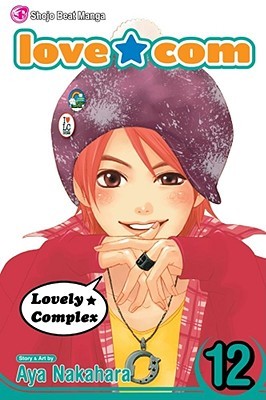
Love*Com (Lovely*Complex), Volume 12 The story here is beautifully simple. Both Risa and Otani have a hight complex. A girl who's too tall and a boy who's too short, in both of their cases it has gone from less than desirable to down right troubling, especially as they realize it's becoming an obstacle to getting the true object of their affections. This is only made worse when their classmates keep throwing them together as the bickering comedy duo when their interest in each other is a grand total of zilch. But instead of giving up and just admitting defeat they decide to help each other pursue romance, but things never quite go as planned. With such charming tag lines as "Love Matters, Not Size"; "The Long and the Short of First Love"; and "They put the Comedy back in Complex" you know that Risa and Otani are perfect together, despite the hight difference.

I have to take a moment here to talk about the artwork. Nakahara has done some excellent work in Love*Com with her ability to draw expressions and unique characters. When I think of her design it stands out. From the textures to the cover art, everything worked flawlessly with the tone of the series.

This is the sort of manga I call a "happy and you know it" type. This is not the place to look for emotional depth or crazy fantasy. Over the 17 volumes of Love*Com we get to see the ups and downs of a possible romance in all of its cute RomCom glory.


What really makes this manga work is its characters. Risa is the perfect female lead who is both the awkward teenage girl looking for love and the hilarious wit with just the right amount of attitude. And Otani is perfect as the cute, athletic guy who isn't a jerkface or a douche, but just a normal (although sometimes frustratingly dense) teenage boy. The secondary characters also play their respective roles very well. Most join the cast as ridiculous love rivals, but end up also becoming fun and interesting characters.

A staple of the series is the way random antagonists pop up every volume or so to challenge our young lovers. Although I found it fun to keep track of them all, it can get old rather fast. Over the whole series there is probably one too many and hashing out the same thing over and over doesn't do a lot for dynamic story development. I think the zaniness of these events is what keeps the book going, but the series does dip near the end. Thankfully it does rebounds for the finale, which left me feeling all warm and fuzy. Some people chose to stop at volume 16 since colume 17 is more of an epilogue  but it made me happy to finish the series with such a nice send off so I'd recommend checking 17 out if you haven't already.

While I was reading the series I had a lot of fun writing reviews for each of the volumes as I went with such gems as "Koizumi takes another spin on the Otani: "duur?" roller-coaster. But while Otani is off acting like a space cadet, we get introduced to a brand spankin' new character Mighty!, the newly arrived class co-teacher and substitute basketball coach. He's "Mighty Fine!" - Volume 6. All such reviews can be read on my goodreads, although I would suggest waiting till after you've finished the series or volume in question before joining me in my giggles.

Overall, Love*Com is a series that just leaves you feeling good inside, which is why I recommend it to anyone up for a smile and hopefully some fangirl fun. The only disappointment here is the more of Nakahara isn't widely available for North American readers.

Monday, June 3, 2013

Review: Daytripper by Fábio Moon & Gabriel Bá

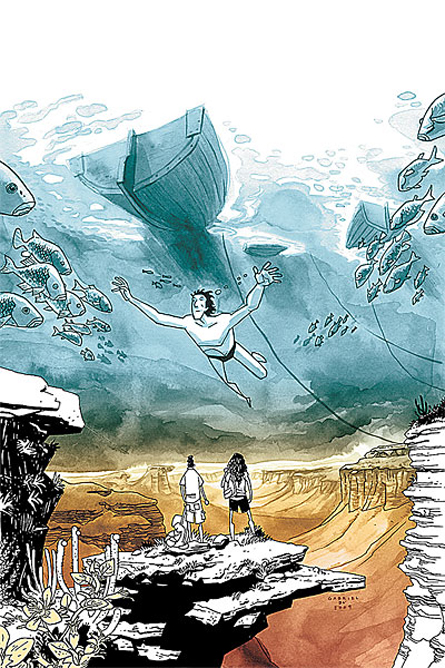
DaytripperDescription: What are the most important days of your life? Each day in Brás's life is like a page from a book. Each one reveals the people and things who have made him who he is: his mother and father, his child and his best friend, his first love and the love of his life. And like all great stories, each day has a twist he'll never see coming...

Stats: Graphic Novel, 256 pages, First Published by Vertigo, February 2010.

My Rating: 5 Stars - A Reading Robyn Favourite! 


Daytripper isn't the type of story that I can describe to you with any justice. That's how I started the confessional I wrote in 2011 on Goodreads. When I want to say something about a book I love, but don't have the words to describe it, I call those confessionals. They're a mush of emotions and love that in no way could compare to a real thought. Sometimes, that's the best way to experience a book like Daytripper, emotionally and as fully as possible.

The beauty in this book is truly unbelievable. I've praised many graphic novels for their art before, but Daytripper is by far the best artwork I have ever seen in print. However, this book manages to go well beyond just remarkable art. So often art and story are easy to separate, but in Daytripper one could not exist without the other. Everything about this book is just so rich in imagination and emotional depth. I was lucky enough that this was one of the first graphic novels I ever read. When I first got my hands on it I had no idea of what I was getting myself into, but when you turn that first page you can tell that this is something special. It's one of those graphic novels that embraces the medium so fully that you could not imagine this story being told in any other way.

The story here is about the life story of Brás de Oliva Domingos. He's the son of a famous Brazilian writer, and dreams of one day being a writer himself, however instead he spends his days writing obituaries for the paper. But this is no ordinary life story as with the beginning of each new chapter we also experience an ending. With each new ending the world around Brás changes in drastic and unforeseen ways. This is not the hum-drum of a static life story, one beginning, one middle, one end, but instead a life much more like ours, capable of changing at any moment.

You can probably feel the vagueness of this description, but trust me, the less you know the better off you are. Go into this story with as little information as possible. Let it surprise you! I know I certainly was and that was one of the best parts. Daytripper comes with its own experience, one that personally brought me to tears.

Gabriel Bá may be a familiar name for he has also has done the artwork for the well respected Umbrella Academy series written by Gerard Way. But here he's teaming up with his twin brother, who is also an artist and writer for comics himself. Together they may very well be super-twins! They have posted tons of their art on their website and flickr. For a preview of the amazing art within Daytripper you can also check out some actual pages on their flickr as well.

I can't stress this enough, if you're ever looking for an amazing graphic novel to read, then Daytripper is it. Even though I read this book for the first time over two years ago, I still think about it to this day. A game changer, Daytripper has yet to be topped in my mind and I sometimes doubt if it ever will be.


Monday, May 27, 2013

Review: Chopsticks by Jessica Anthony & Rodrigo Corral

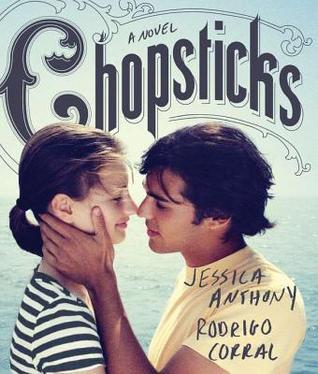
ChopsticksDescription: After her mother died, Glory retreated into herself and her music. Her single father raised her as a piano prodigy, with a rigid schedule and the goal of playing sold-out shows across the globe. Now, as a teenager, Glory has disappeared. As we flash back to the events leading up to her disappearance, we see a girl on the precipice of disaster. Brilliant and lonely, Glory is drawn to an artistic new boy, Frank, who moves in next door. The farther she falls, the deeper she spirals into madness. Before long, Glory is unable to play anything but the song "Chopsticks."

Stats: YA Graphic Novel, 272 pages, Published by Razorbill, February 2012 .

My Rating: 3 STARS


You have a story. How do you chose to tell it?

Chopsticks is the kind of book you read more then once in a single sitting, well technically not read per say, but the type of book you observe multiple times.

This book is about more then just words on a page, instead Chopsticks chooses to tell its deceptively layered story through images and emotions instead of just plain old text. These various photographs, letters, paintings, drawings, and mementos tell a chronicle of Gloria "Glory" Fleming, a young piano prodigy, and her great young romance with her neighbour Francisco Mendoza. But there could quite possibly be more then meets the eye when it comes to the real narrative being told. There are two very different sides to this story and the only thing that matters in the end is which side you choose to believe.

My hat is truly off to these creators! This form of creating a story must be no small feet to do. I can't imagine the work that must have gone into collecting all the resources and putting something this complex together. What might seem like a simple structured story takes on new meaning when every detail must have been planned and scrutinised again and again before this ever made it to print.

But with all that out of the way, let's get to the nitty-gritty of things. I liked the book, but it didn't completely amaze me. It was fun to flip through and interesting enough that the characters sucked me into their world, but Chopsticks is not without its detractors.

For one, I can't see this being particularly memorable on the whole. I know I'll remember that I once flipped through a book that was told through images instead of words, that will stick with me, but I don't know if come tomorrow morning I'll still care about Gloria and Francisco. This felt like just a tiny little blip on my radar compared to the feeling I get when I read a novel, or even a graphic novel, that I find equally interesting and compelling.

Another really major issue I had was that just by the nature of the medium, the scope of the story is very narrow. It's sort of like staring down a cardboard tube. You can see a tiny part of what you know is there, but your brain will have to fill in the rest and build extra dimensions to a two dimensional story. Now, the more you understand story structure and characters the easier this will be, but I found myself having a lot of trouble at times with the limitations of a story with such a very selective perspective. It made it less believable, less engrossing, that I didn't have any sort insight into anything but the three characters the book offers.

Needless to say, this book has me a little mixed. I liked it and while reading it I really liked it, but the longer I let it sit the more I have to go back to it and refresh my memory. I have a feeling this is something I'll come back to a few times in the next couple of days to re-experience, but it just doesn't have the long-lasting emotional pull that I expected it to have. Still, it was a amazingly told recount and has more then enough merit to recommend to anyone to just take an hour to look at it.

Normally for reviews of graphic novels I include images from the book, however in the case of Chopsticks this simply won't do. Instead I've managed to stumble upon a video book trailer from PenguinYoungReaders to give you a sneak peek of what to expect without giving anything away. Enjoy!


Tuesday, May 21, 2013

First 6 Review: The Wallflower by Tomoko Hayakawa


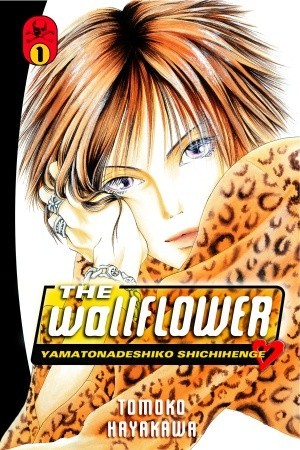
The Wallflower, Vol. 1 (The Wallflower, #1)Description: It’s a gorgeous, spacious mansion, and four handsome, fifteen-year-old friends are allowed to live in it for free! There’s only one condition–the boys must transform the owner’s wallflower niece into a lady befitting the palace in which they all live! How hard can it be?

Enter Sunako Nakahara, the agoraphobic, horror-movie-loving, pockmark-faced, frizzy-haired, fashion-illiterate recluse who tends to break into explosive nosebleeds whenever she sees anyone attractive. This project is going to take more than our four heroes ever expected: it needs a miracle!

Stats: YA Manga, On Going Series, English Series published by Del Ray and Kodansha USA 2004-Present.

The First 6: Volume 1-6 
Spoiler Free Review

The Wallflower, Vol. 6 (The Wallflower, #6)It's not always easy being beautiful, at least not for our boys. They are an attractive bunch and everywhere they go they have to deal with all the celebrity and insanity that comes along with it. On a daily basis they are sexually harassed, kidnapped, blackmailed, and stalked by both men and woman alike who just want to get a piece of them. Fortunately, they have found a safe place in Auntie's mansion home where they are all collectively given the opportunity to live rent-free under one condition. All Auntie wants is for her niece to find true love, but in order to do so she must be turned into a proper lady. If the boys can't pull off the makeover of the century they'll have to pay up their missed rent, which isn't an option.

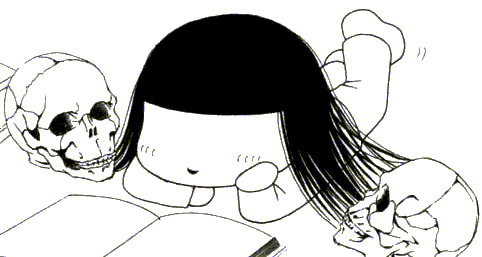
Sunako, the budding lady in question, is not like most girls. She would rather hide away in her dark room watching graphic horror movies with her anatomical manican friends then deal with the real world. To make matter's worse, living with these handsome boys isn't exactly helping. Whenever she sees these "creature's of light" she suffers in the form of nose bleeds and violent outbursts. If the boys plan to transform Sunako into "young lady" they all have to help her get past her hang up on beauty as well as the rejection that made her this way before she can step out of her shell.
   
The Wallflower series is not like anything else I've seen on the manga market. In these first six volumes it's turning out to be absurd in every sense of the word. It's weird and wonderful interchangeably with a side of psycho situations trying to thwart our Sunako at every turn. If you don't like weird and crazy then this may not be for you. You got to be able to just go with it!

In these first six volumes there there isn't much of a continuous story line. Each chapter reads more as short story vinyettes, sometimes involving trying to make Sunako a lady, sometimes not. In each chapter we are introduced to some ridiculous set up and get to watch as the characters try to manage the situation. This format can be a bit hit or miss. When it hits it is fun and interesting to read. When it misses it takes a little bit of the steam out of the series.
The art art here is also stylisticly not something you normally see. The boys are prettier than the girls and the way their lips and eyes are drawn make them stand out in a big way. It took a lot for me to get used to the style, but after a while it's easy to see how the art plays into the themes in the manga itself. Sunako has this odd habit of existing in a chibi like form even when in the same panel the other characters are drawn normally. She appears not as one of the beautiful people we know she is, but as an "other".


However, not everything is sunshine and roses for me and The Wallflower series. After six volumes I'm getting a little bit bored with the repetitiveness of the storyline thus far. It's starting to feel like I'm reading filler stories and not anything to do with the actual plot or development of the characters. I was hoping for more depth by this point and we are so close to being there, but it's just not. The Wallflower is the sort of manga that I've found to be nice to read once in a while when I'm looking for something short, but not something I go out of my way to seek out.

 This series is incredibly easy to put down and forget about, but there is this underlying promise of something more that keeps me interested in it.                                  

I've watched and enjoyed both the anime adaptation "The Wallflower" and the Japanese drama "Yamato Nadeshiko Shichi Henge". It's worth noting that you can watch all 25 episodes of the anime's English dub on the Funimation website for free and the drama is available with English subtitles on YT. From these previous experiences with the material I know I have an interest in this series, but I've just found the manga more difficult to get into. 

Presently the series is about to publish it's 31st volume in 2013. I'm willing to give it another 5 volumes before I make up my mind on it, but we'll see if I don't get distracted by something shiny before then.

Friday, May 17, 2013

Review: Zombicorns by John Green


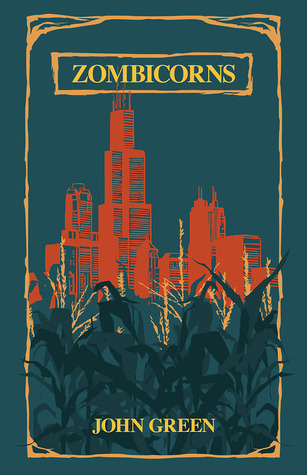
ZombicornsDescription: Originally written as a Nerdfighter charity incentive author John Green presents to us (from novella introduction.) "a bad zombie apocalypse novella. It was written in a hurry. It is riddled with inconsistencies. And it never quite arrives at whatever point it sought to make. But remember: The $25 you donated to charity in exchange for this steaming mess of prose will help our species shuffle along, and I hope you’ll feel warmed by your good deed as you read."  The novella has since been made available under creative common license to be read online for free opening it up to the rest of us. 

Stats: YA Zombie Novella, 72 pages, Available Legally Online for Free

My Rating: 4 STARS


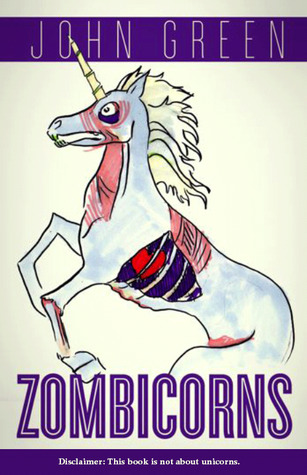
Zombicorns by John Green
alternate cover by LoriDays
Honestly, I'm in complete and total shock by how much I enjoyed this. Because really, Zombicorns is not "good" when compared to other written words, but it was very enjoyable. Although, one should note, it has nothing to do with Unicorns. (By far the most under-represented magical creature in fiction.)

As someone who consumes a lot of fan fiction of varying quality, I can say that this novella reads in a similar way. There's nothing glaringly bad about the writing, but you can see the errors and where things went wrong. Some readers will find this easier to tolerate than others, but overall I found it worked well with the journalling concept. (Because who proof-reads journal entries aside from me?)

Speaking of journals, Zombicorns is less about plot or character and more the ramblings one would have if the world was ending. I found the story was at its best when it wasn't talking about corn or Z's and was instead on some philosophical tangent. In most cases this would bother me, but here it worked well.
"Being a person, I had come to realize, is a communal activity. Dogs know how to be dogs. But people do not know how to be people unless and until they learn from other people. Which got me to wondering whether it’s possible to learn how to be a person in a world where all the people are dead." (59)
The ideas John presents in Zombicorns will be very recognizable to subscribers of the vlogbrothers. A lot of the tangents are about things both John and his brother Hank have discussed before in their videos, which made this especially fun for me because it took these abstract video ideas and gave them a very specific perspective and application.

Zombicorns is short and consumable, but it has its moments of meaning and depth. I'm glad this was something that John just put out there and didn't think about too much.

Thursday, May 16, 2013

Series Review: The Color of Earth by Kim Dong Hwa

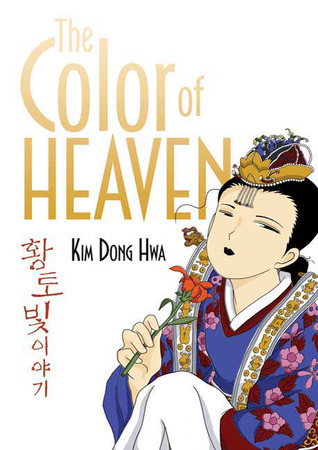
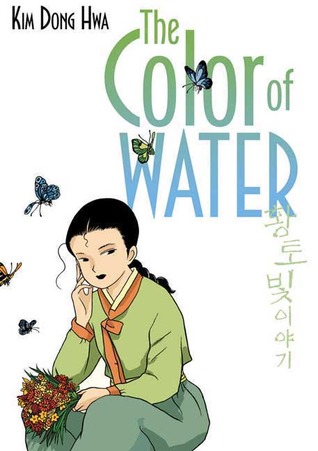
The Color of Earth (Color Trilogy, #1)The Color of Heaven (Color Trilogy, #3)The Color of Water (Color Trilogy, #2)

Description: Ehwa grows up helping her widowed mother run the local tavern, watching as their customers – both neighbours and strangers – look down on her mother for her single lifestyle.  Their social status isolates Ehwa and her mother from the rest of the people in their quiet country village.  But as she gets older and sees her mother fall in love again, Ehwa slowly begins to open up to the possibility of love in her life discovering along the way the pain of heartbreak – and that love is always complicated.

Stats: Young Adult Manhwa, Compete Series Books 1-3, English Editions (Book 1-3) Published by First Second in 2009.

My Overall Rating: 3 STARS

In The Color of Earth series we take an intimate look into the journey to womanhood. What strikes me now that I've completed the series is just how true it rings to early curiosity and the awkward cautiousness of growing up. In the time when this book is set in rural Korea you obviously can't just Google your questions away like we can now. Learning about the unknown was a much more communal experience as you gossip with your friends and covertly ask your mother questions. It's easier not to blush in front of your computer screen. It's through this setting of a more innocent time that we see the first blush of growing up without all the answers. I feel like that is the power of this book. The combination of narrative and education is something that is indispensable to a young adult audience. 

Throughout the book it uses various metaphors to have frank and honest discussions about sensitive topics, which would otherwise be frowned upon. It was used in an interesting and informative way that made its intent clear without being explicit. It's all butterflies and flowers! Unfortunately, it is this very use of metaphor that dragged the story down. What starts off as interesting and quaint eventually turns into overwhelming as every begins to relate back to being a butterfly, or blooming like a flower, or a butterfly landing on a blooming flower in the snow. It's as if the author got a little too wrapped up in his language, which may have been better in the original Korean. It's impossible to say how much of the boring, drawn out metaphors were intentional or accidentally created in the translation process. Either way, I often found myself increasingly bored with each book, finally ending in frustration.

On the other hand, I simply could not bring myself to put these books down and the art had a lot to do with my continued interest. Every page was gorgeous, even in simple black and white. The beauty of settings and the wonderfully drawn characters keeps your eyes on the page. Everything was stunning to look at and I frequently found myself coming back and re-read pages just to stare at the artwork with all its wonderful details. You could sense the setting and the way the characters moved. The expression were always more revealing than the text and a character's body language spoke volumes about what wasn't really being said.   

I would recommend this book if not solely on the value of the art itself, regardless of any problems I had with the storytelling and that is truly saying something. 

Ehwa and her Mother
I think what has me feeling the most positive about this series is due to Kim Dong Hwa himself. Despite being male and having his words go through the filter of translation I could not tell this was written by a man. His ability to write from a woman's perspective in a way that is both honest and respectful of what it means to be a woman is frankly a rather amazing feat. This may be in part due to that fact that he is drawing from a very personal place as he re-imagines what his mother's youth must have been like using her experiences as inspiration for the story. 

It's probably also for this reason that the mother-daughter relationship really stands out. The way these two learn from each other and care of each other is unlike what I'm used to seeing. According to fiction, in all forms, there is no such thing as the supportive mother. Mother-daughter relationships are more likely to be fraught with conflict, disappointment, and is something that only a highly trained therapist can truly fix. Here, Ehwa's mother doing her best to raise her daughter and guide her through growing up by giving her the space and freedom to do so. Of all the messages in this series about growing up I feel like their relationship is one of the more important ones. 

Then of course I feel I have to mention the most overwhelming negative I walked away with from this series. I know it's a pain, but publishers, when publishing something in Canada it would rock if you could spell colour correctly. I believe that you are truly doing a disservice to your moral obligation in properly educating our youth by teaching them such vulgar misspellings and harming their development. I think it's unacceptable and I believe libraries and book sellers should be required to add a U to the title before placing it front and centre in the YA department in order to remedy this grave error in judgement. 

Speaking of grave errors in judgement, for the some odd years since The Color of Earth has been published in North America it has come under fire becoming commonly listed among banned and challenged books. On the ALA's yearly list of the top ten challenged books, The Color of Earth was #2 in 2011 for the reasons of "nudity; sex education; sexually explicit; unsuited to age group", but not for it's misspelling of "colour". Shocking!   

Of course the problem lies for these petulant few in that The Color of Earth is a graphic novel series aimed towards a YA audience that talks about sex, through the explicit language of the previously mentioned flowers, peppers, butterflies, and chestnut trees. In the few occasions that characters are actually getting naked I found it no more graphic then what I've come to expect from the front covers of comics about Wonder Woman or Power Girl.  

Scandalous!
When it comes to teaching those in the young adult age range I feel books like these ones are important. I also find it a little ridiculous that people are trying to ban a book that in itself is a more innocent and conservative look at sex and love than the majority of media out there. Thankfully, on the ALA's yearly list for 2012 The Color of Earth series was not among the top ten. I highly encourage everyone to go and check out the list, inform yourselves about the censorship of these challenged books, and then go out of your way to read them! 


If you would like to read my individual reviews which go into much more detail about the positives and negatives of the series then you can check those out on Goodreads here: 

Monday, April 8, 2013

5 Centimeters per Second by Makoto Shinkai, Art by Yukiko Seike

5 Centimeters per Second (5 Centimeters per Second, #1-2)Description: A tale of two people, Tohno Takaki and Shinohara Akari, who were close friends but gradually grow farther and farther apart as time moves on. They become separated because of their families yet continue to exchange contact in the form of letters. Years pass and the rift between them grows ever larger. However, Takaki remembers the times they have shared together, but as life continues to unfold for him, he wonders if he would be given the chance to meet Akari again as the tale embarks on Takaki's realization of the world and people around him.


Stats: Japanese Contemporary Graphic Novel, Volumes 1 & 2, 566 pages, English Edition  First Published by Vertical, June 2012.

My Rating: 4 Stars

When you look back at your life what stands out? 

The story behind 5 Centimeters per Second is one that will seem familiar no matter what your personal experiences are. At some point we all lose something, we all regret losing something, and we all long for the something we lost. For Tohno Takaki he fell in love at a very young age and lost the chance to experience it when the girl of his mutual affections, Shinohara Akari, moves far away. They fall out of touch, but she's the girl he just can't move on from. There's no closure, no ending, just a long silence of something that never got the chance to be anything. 

This graphic novel is just two volumes long and is based off of the 2007 animated film of the same name. The author Makoto Shinkai also wrote and directed the film, which can only mean good things for the adaptation quality.

I'll be honest, it feels wrong to talk about the graphic novel without at least linking to the movie trailer. The art of the film is so beautiful that I almost feel like on a visual level it could be a better format for the story, but I will have to wait till I see it to make any comparisons. The trailer here is the subtitled version, though there is an English DUB of the movie as well. 

As the story goes we see the various relationships Tohno falls in and out of. Growing up isn't easy, love isn't easy, but you've got to make it work somehow right?   

What I enjoyed about the graphic novel is that we don't just see things from Tohno's perspective. This is not just his story, it's also Shinohara Akari's story, and Kanae Sumida's story, and a bit of Risa's story too. Normally these women would be considered secondary characters Tohno's narrative, but 5 Centimeters per Second stays true to its realism in making these characters have their own development and their own life story that we get to somewhat engage in.

Despite the overwhelming praise I've seen in people recommending this, I didn't come away from the book liking it as much as I thought I would. 

The graphic novel has a unique perspective that as a reader you add your own personal meaning to the story being told. What stands out to me may not stand out to others and vice-versa. You may see this as a depressing story or you may see this as a hopeful story. Either way it's all up to how you interpret the characters and their interactions on a personal level. 

The experiences I bring to it is part of the reason of why I just didn't enjoy the first part of the book with the events between Tohno and Shinohara Akari. I just couldn't see a good reason for why these two were so very attached to each other. As someone who has moved around a lot it was impossible for me to view their separation via distance as something as dramatic as the story needed it to be. Yes, people lose touch, but it's not impossible to stay in contact if you want to as badly as these two did. That personal experience I was talking about involved me moving 5 hours away from my best friend and we kept in constant contact for four years after after that move.  

But not all was lost! I became quickly engaged in the story when the character of Kanae was introduced. I connected with her instantly, which made her the most relatable character in the story to me. Different people will connect with different characters. The great thing about this sort of story is that it isn't required of me to connect with each and every one in order to enjoy the book fully. 5 Centimeters per Second is like a collection of short stories that happen to be interwoven together as part of life's grander scheme. It's something that you'll want to read more than once just to see what you can devise from its meaning.

Despite any misgivings I had at the start, this graphic novel is something I would definitely recommend to anyone interested in reading it. I'm seriously looking forward to checking out the film just to experience this story again.